
“I like to think of God as…”
We have probably heard those words used before. We may have even said them ourselves. Sometimes they introduce a thoughtful observation, and other times, they introduce a version of God shaped mostly by what someone finds comforting or reasonable.
We all bring assumptions to the subject of God. Our upbringing, experiences, disappointments, and desires influence how we picture Him. Those influences can be powerful, but they cannot determine who He is.
God’s identity doesn’t depend on our preferences.
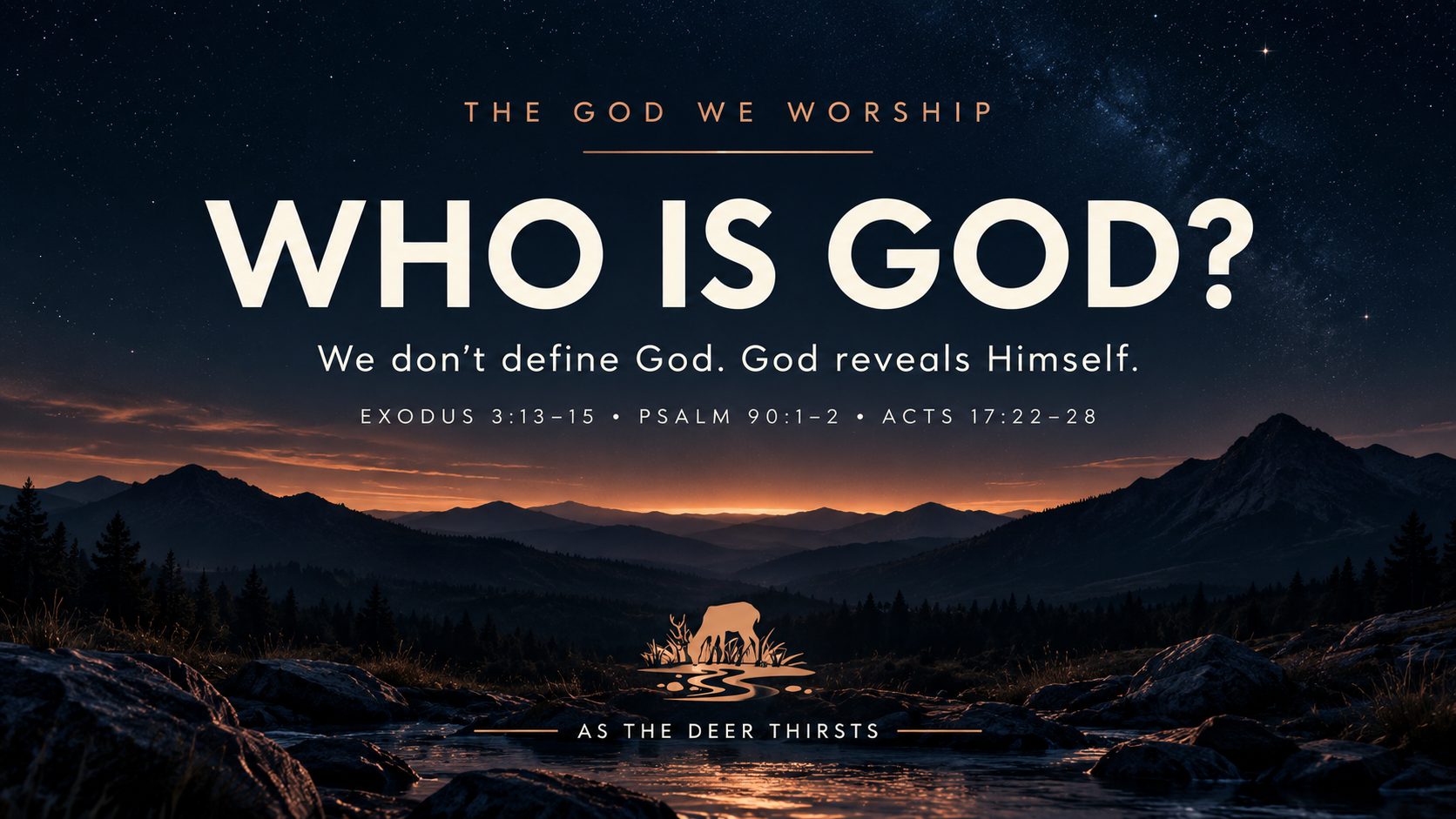
As we begin considering The God We Worship, we need to start here: We don’t define God. God reveals Himself.
When God spoke to Moses from the burning bush, He commissioned him to lead Israel out of Egypt. Moses asked what he should say when the Israelites wanted to know the name of the God who had sent him.
God answered:
“I AM WHO I AM.” (Exodus 3:14a, ESV)
He then instructed Moses to tell Israel, “I AM has sent me to you” later in the same verse.
There is more depth in that name than a short devotional can explore. But notice where the answer comes from. Moses doesn’t decide who God should be. God identifies Himself. In the following verse, He identifies Himself as the God of Abraham, Isaac, and Jacob, the God who had made promises and was acting to fulfill them.
Moses was being called to trust the God who spoke to him.
The same is true for us. We must trust the God who speaks to us through Scripture.
God Is Eternal
Psalm 90 helps us understand the greatness of this God:
“Before the mountains were brought forth,
or ever you had formed the earth and the world,
from everlasting to everlasting you are God.”
(Psalm 90:2, ESV)
Everything around us has a beginning. Mountains existed before we were born, but they have not always existed. The earth itself had a beginning.
God did not.
There was never a time when God came into existence. He didn’t develop into God over time, inherit His position, or receive life from someone greater. Before anything was created, He already was God.
That stretches our understanding because we have never experienced existence without a beginning. However, our inability to fully comprehend His eternity doesn’t make it less true. It reminds us how much greater He is than we are.
God Is Self-Existent
God also needs nothing outside Himself to sustain His existence.
When Paul spoke to the people of Athens, he encountered a city filled with idols. He announced the God who made the world and everything in it, explaining that this God is not dependent on human service:
“nor is he served by human hands, as though he needed anything, since he himself gives to all mankind life and breath and everything.” (Acts 17:25, ESV)
We need food, water, rest, and air. We depend on things we didn’t create and can’t ultimately control. Every breath reveals our dependence.
God gives what we receive. His life doesn’t depend on ours.
That changes how we understand worship. We don’t gather because God needs us to keep Him important. We gather because He is worthy. Our praise acknowledges a greatness that already belongs to Him.
God Is Our Creator
It also changes how we understand ourselves. We are His creation. He is our Creator.
God is completely distinct from the world He made. The beauty of a sunset can display His handiwork, but the sunset is not God. Neither is the ocean, a mountain, or the universe itself. Creation points beyond itself to the One responsible for its existence.
Yet His greatness doesn’t mean He is distant.
In that same message at Athens, Paul explained that God is near and that our lives depend on Him (Acts 17:27-28). The eternal Creator is attentive to the people He made. At the burning bush, He told Moses that He had seen His people’s affliction and heard their cries (Exodus 3:7).
The God who needs nothing hears people who need Him for everything!
What should we do with that?
We can begin by opening Scripture with a willingness to be corrected. When something God reveals challenges our assumptions, we need to examine those assumptions. Knowing Him requires humility and the willingness to let Him speak for Himself.
We can also learn to acknowledge our dependence. The breath we take without thinking, the strength we use to work, and the days we fill with plans are gifts we cannot provide for ourselves.
This week, before asking what you need God to do, take time to consider who He has revealed Himself to be. Read Exodus 3:13-15, Psalm 90:1-2, and Acts 17:22-28 slowly.
Let His eternity steady your worries. Let His greatness deepen your reverence. Let His nearness encourage you to seek Him.
We don’t define God. God reveals Himself. Our response begins with listening.
Leave a Reply